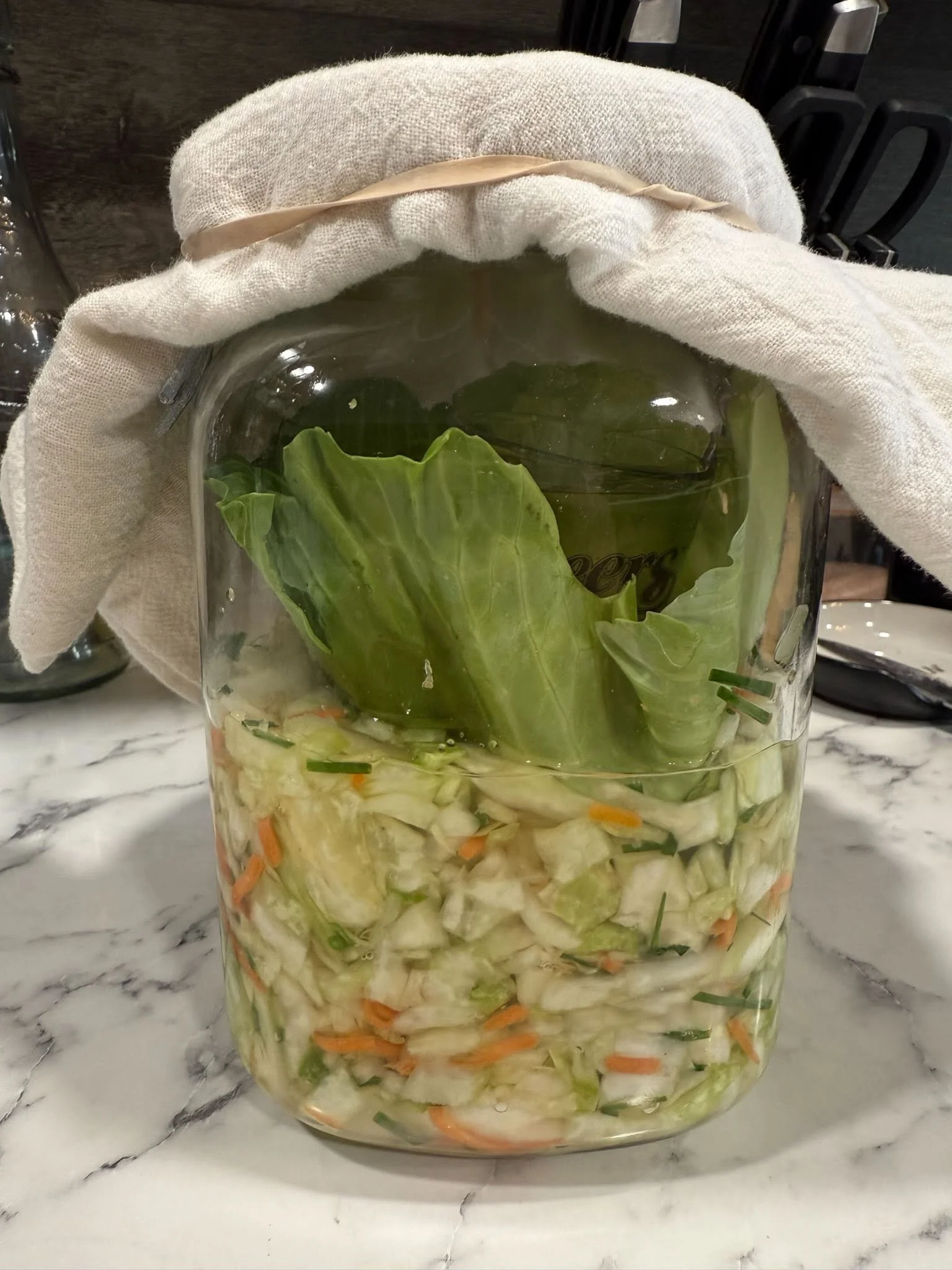
Sauerkraut is one of my favorite examples of how simple food can do so much. With just cabbage, salt, and a little time, naturally occurring microbes begin transforming an everyday vegetable through fermentation, creating organic acids, changing the flavor and texture, and giving us a living food that has been part of traditional kitchens for generations (yet, so many of us have lost this simple special food in our homes) and I say it’s time we get it back!
If you’re new to fermenting, sauerkraut is one of the easiest places to begin. This recipe makes a small batch so you can get comfortable with the process without it feeling like too much all at once.
You can absolutely double it if you’d like, but over the years I’ve found that starting with this amount is the easiest way to learn, build a little confidence, and get a feel for what good fermentation looks, smells, and tastes like, therefore great when you’re just getting started and my go-to amount when teaching.
Ingredients:
½ head green cabbage (approx. 1 lb) chopped
1 1/2 tsp sea salt
1/4 tsp caraway seeds (optional)
Step 1: Preparing the Ingredients
Step 1: Slice cabbage very thinly with a knife. Place in a large bowl, add in the sea salt and gently massage into the cabbage. (Be sure to have freshly washed hands.)
After just a few minutes, the cabbage will begin to soften and release liquid. Be patient & enjoy the process. This liquid will actually become the brine solution that the sauerkraut will ferment in. Mix in the caraway seeds, if using.
Step 2: Storing & Fermenting the Sauerkraut additional Brine Solution (if needed)
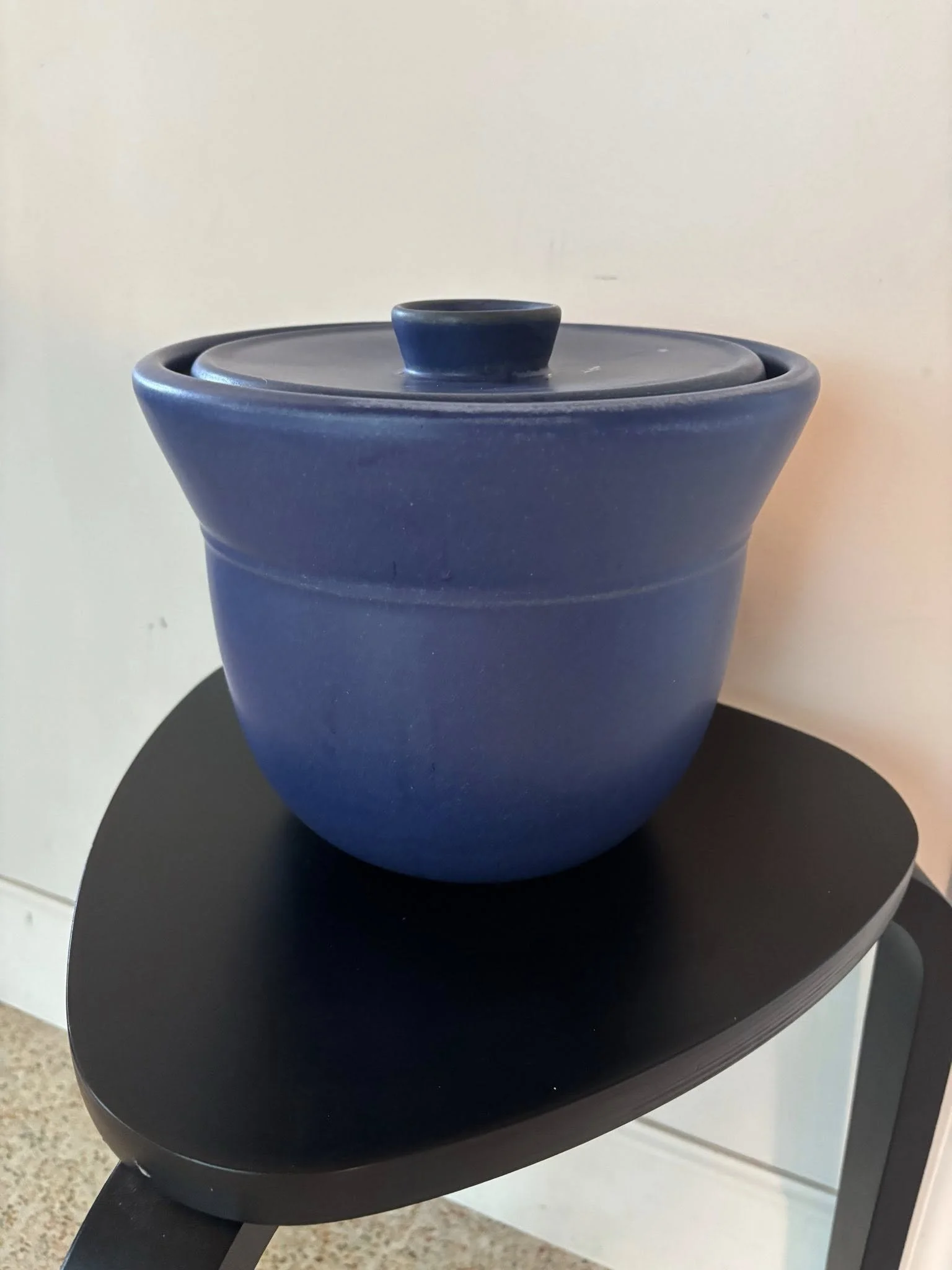
At this point, transfer the cabbage and the liquid to a jar or other non-reactive container. Press the cabbage down with clean hands & if needed, add a bit more Brine Solution, so that once weighted, the cabbage will be completely submerged.
*Extra Brine solution can be made by combining 1 cup water & 1 tsp sea salt. (that’s a go-to brine ratio) - Remember to only use what you need from the extra brine.
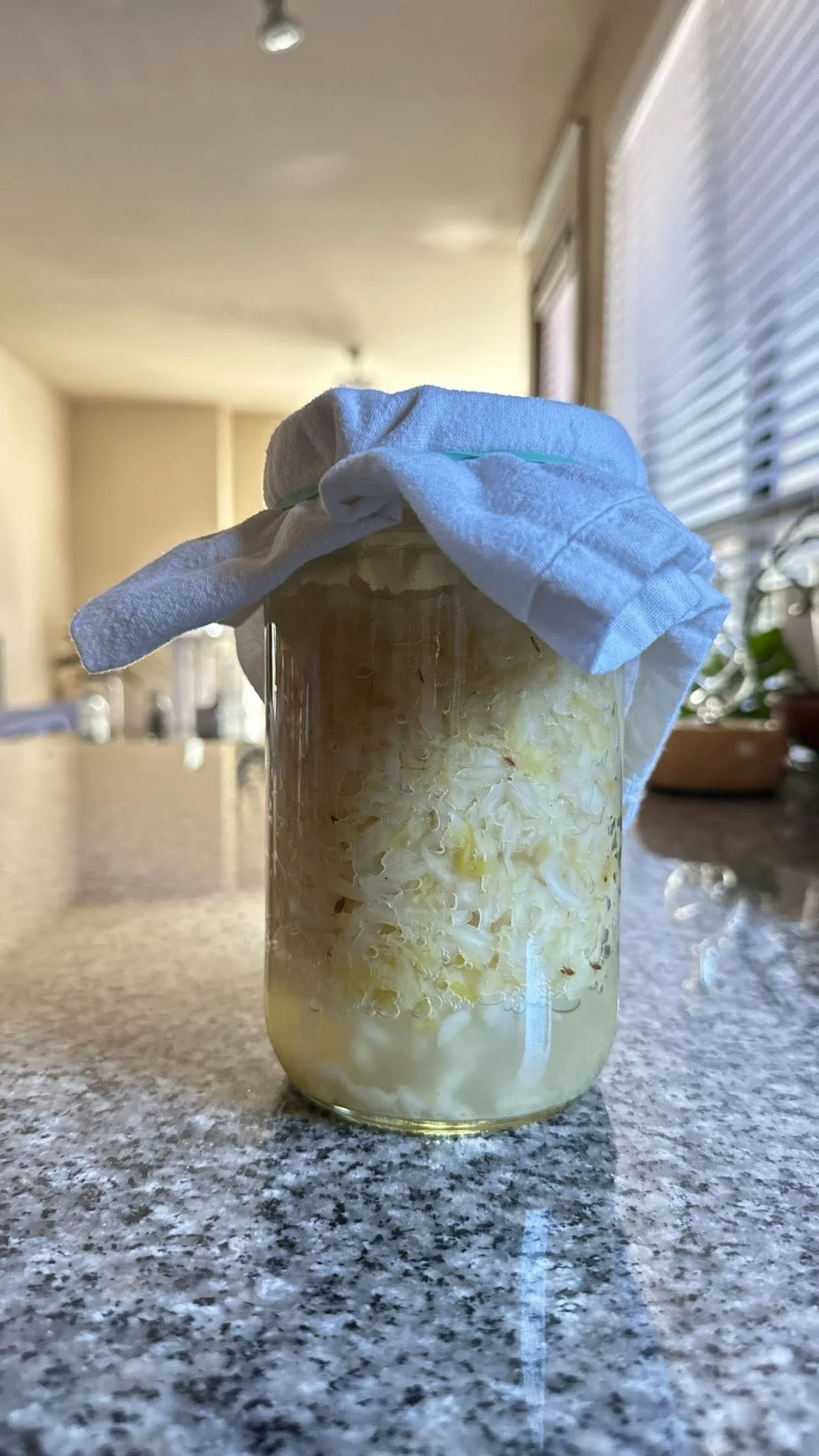
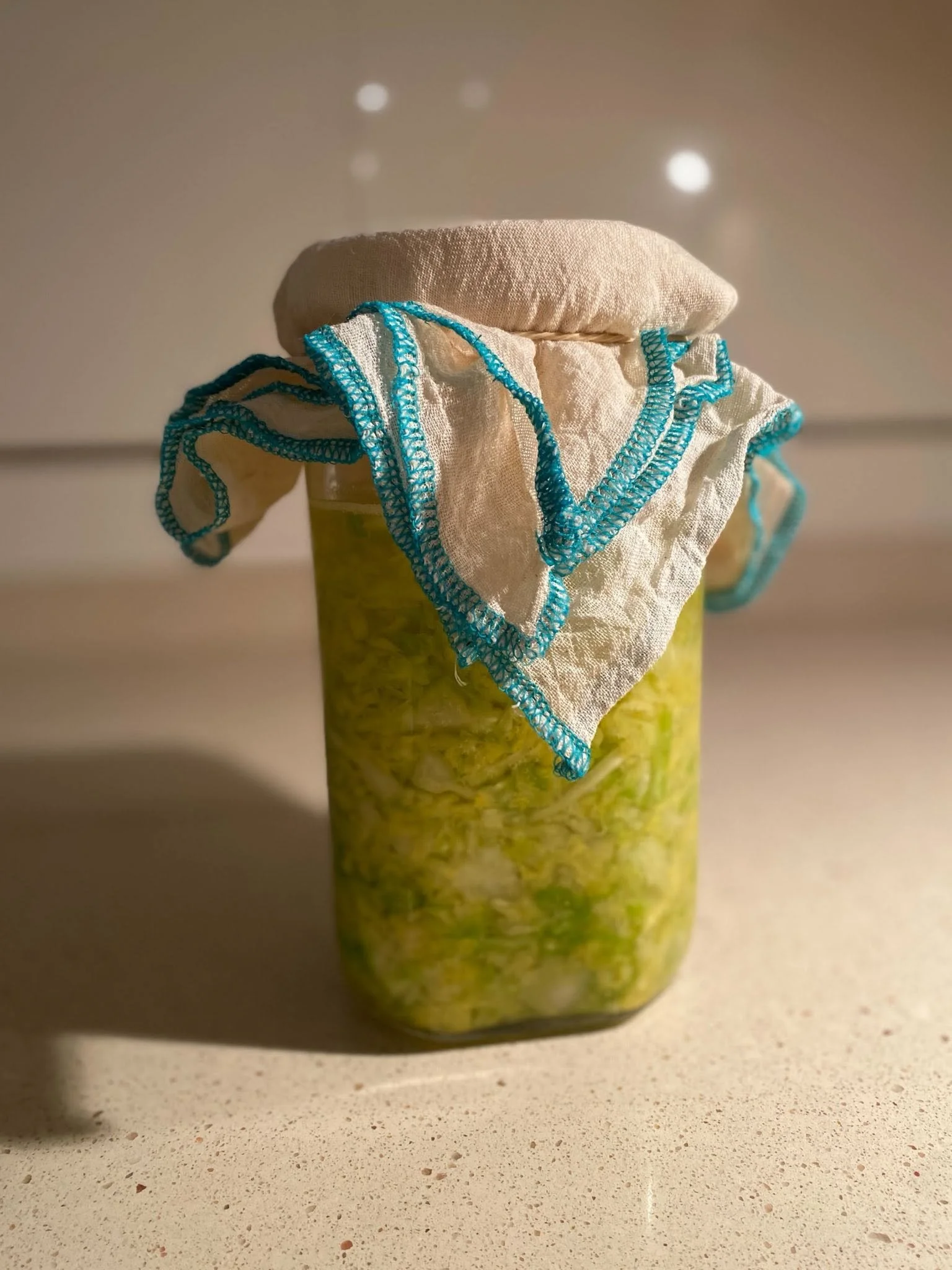
Now, cover the weighted container with a clean towel or cloth to allow the fermentation process to begin.
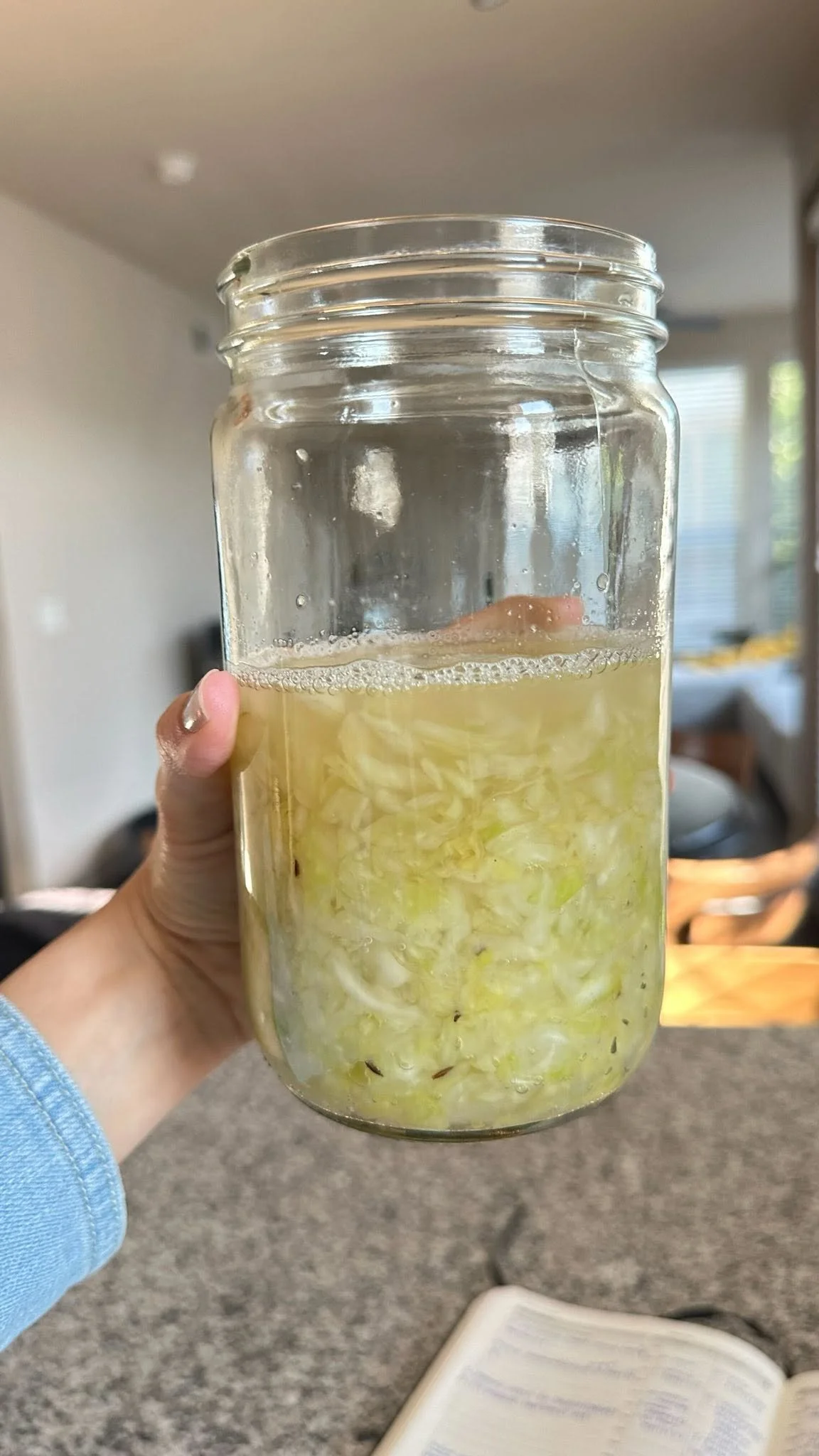
Leave the sauerkraut at room temperature to ferment for at least 4 to 7 days. As fermentation gets underway, you’ll begin to notice tiny carbon dioxide bubbles forming in the jar. Give it a taste, it should be starting to develop that pleasantly sour, tangy flavor we’re looking for.
For a more developed flavor and acidity, I typically let sauerkraut ferment for about 14 to 21 days at room temperature before moving it to the refrigerator.
That said, I know real life happens. There have been plenty of times when I’ve realized I don’t have a good batch tucked away in the fridge, made a fresh jar, and started getting very impatient around days five-seven. If you taste yours at that point and you love it, go ahead and start eating it!
My only advice: start another batch right away. That way, by the time you finish the first jar, your next one is already happily fermenting on the counter.
At this point, seal the container, label and date it and refrigerate. Many krauts can keep six months or more if kept well refrigerated.
NOTES:
Some ferments can take longer to initiate, especially ferments with more volume, higher specific salinity and lower room temperature (e.g. in a 55°F/12°C basement vs. a 70°F/21°C apartment). The longer the ferment, the tangier and more “bioactive” the mixture will become.
Once you refrigerate it, the fermentation process will slow dramatically.
P.S. If there is any scum (called “bloom”), simply skim it off the top. This is normal and is not contamination.
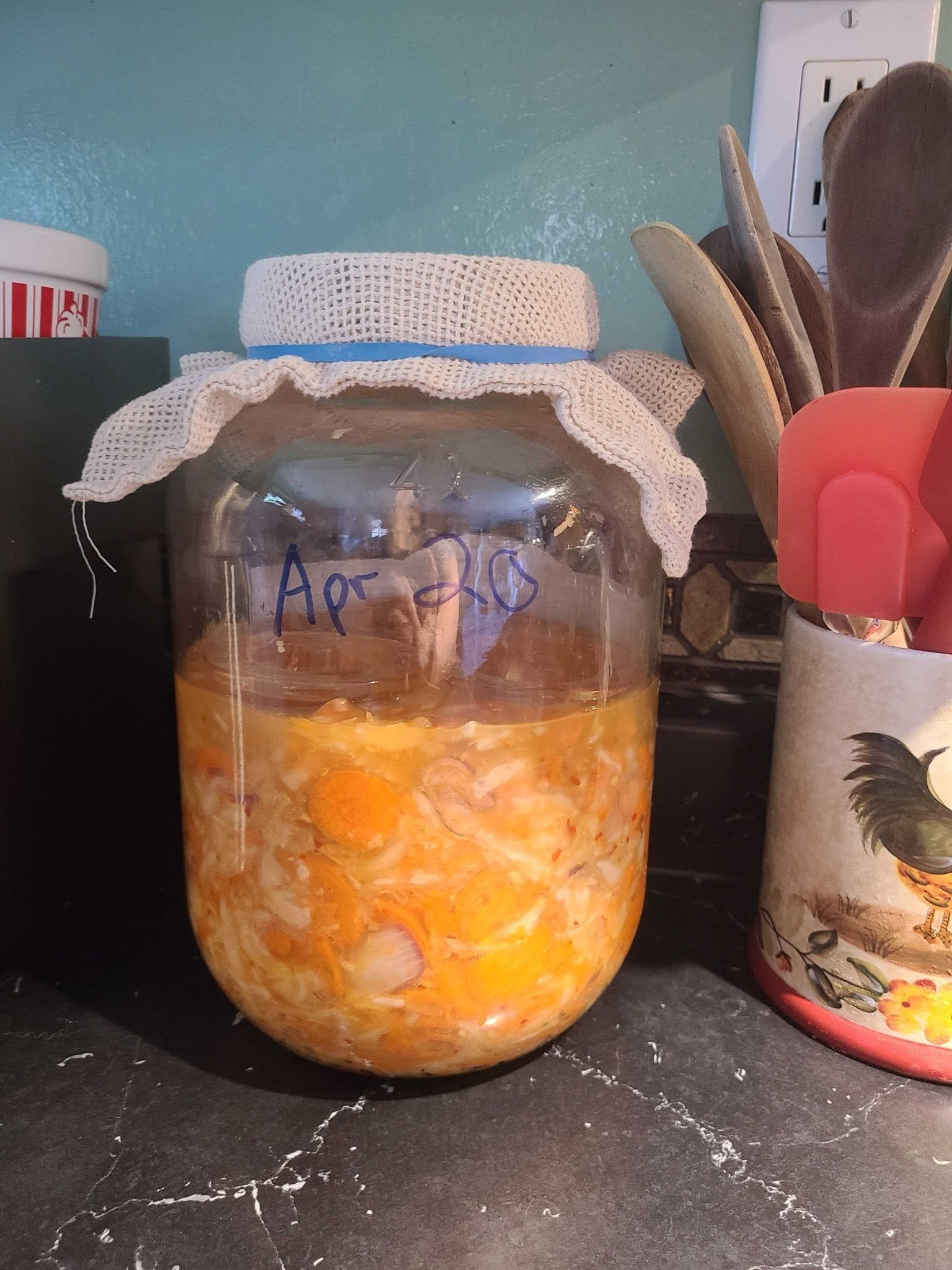
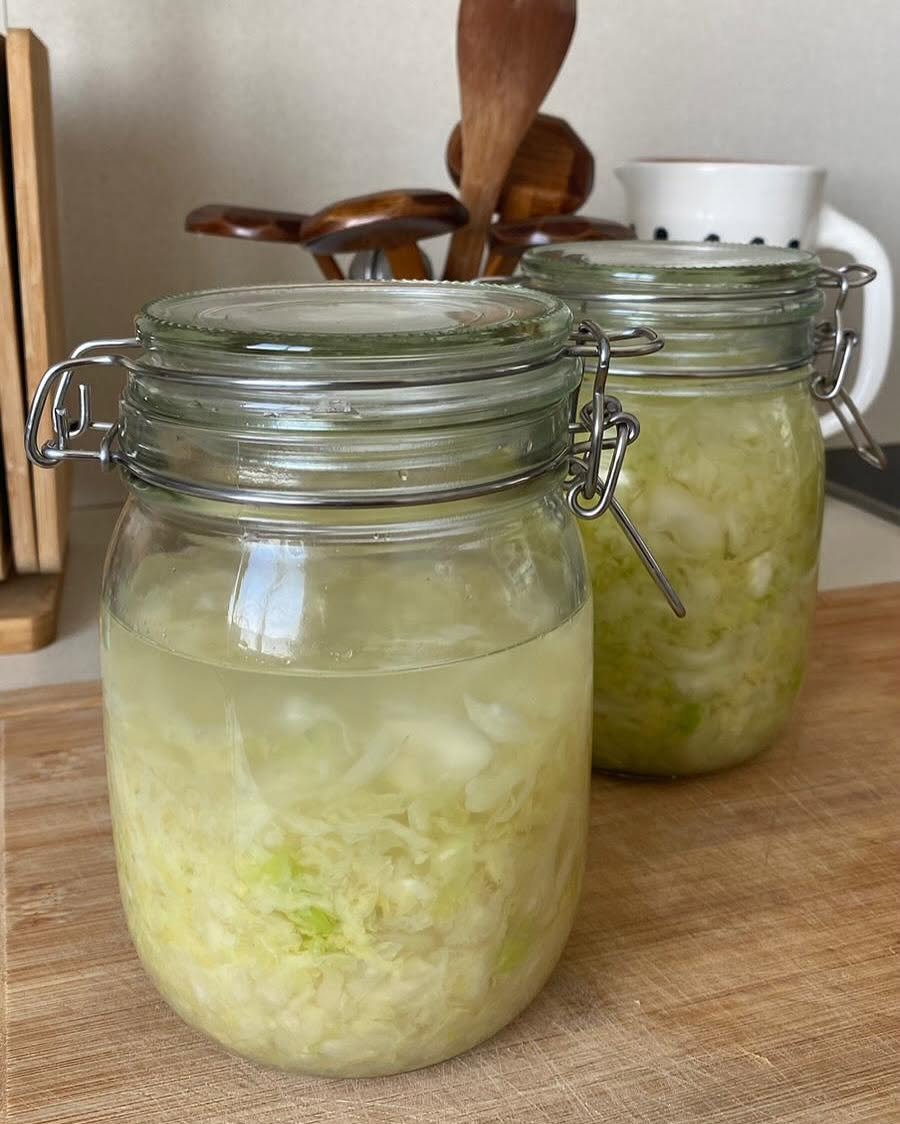
Here are some fun photos from friends I’ve taught this process to!